UNITED STATES—Even before the last day of winter on March 20, the weather went summery fast. Not only has there been no rain in quite a while, but it has become rather warm also. This climate here can be tricky like that sometimes. While moisture becomes less available from rain, it also becomes more necessary. Watering, or irrigation, needs to resume to compensate.
Watering had not been much of a concern during rainy weather through winter. Only pots and planters that are sheltered by eaves still needed it. Between rainy weather, cool and humid weather inhibited evaporation. Therefore, watering was rarely if ever necessary to compensate for a lack of rain. Even sheltered planters needed less than during summer.
Lack of rain and warmer weather are not the only reasons for the need for watering. Day length is slowly but steadily increasing. Sunlight intensity increases as the sun becomes higher in the sky. Lengthening days of intensifying sunlight accelerate the desiccation of soil. It also accelerates evapotranspiration, which is the evaporation from foliar surfaces.
Watering compensates for dryer and warmer weather.
Furthermore, warming weather accelerates growth of vegetation. This increases its need for moisture that rain no longer provides. Formerly dormant deciduous species will soon develop foliage. They did not lose moisture to evapotranspiration while dormant but will when foliated. Of course, different types of vegetation demand different types of watering.
Soil texture and composition is also relevant to this increasing need for watering. Sandy soil drains well but consequently needs more watering than denser soil. Organically rich soil retains moisture more effectively. Potted plants need frequent watering because their roots cannot disperse very far. Hanging potted plants want even more frequent watering.
With so many variables, there are no simple formulas for determining watering rates. The process ultimately relies on diligent observation of the soil and vegetation involved. Soil, for many plants, should not remain too dry for too long. However, it should not remain too saturated either. Whether irrigation is automated or manual, it must adapt to the weather.
Highlight: Transvaal Daisy
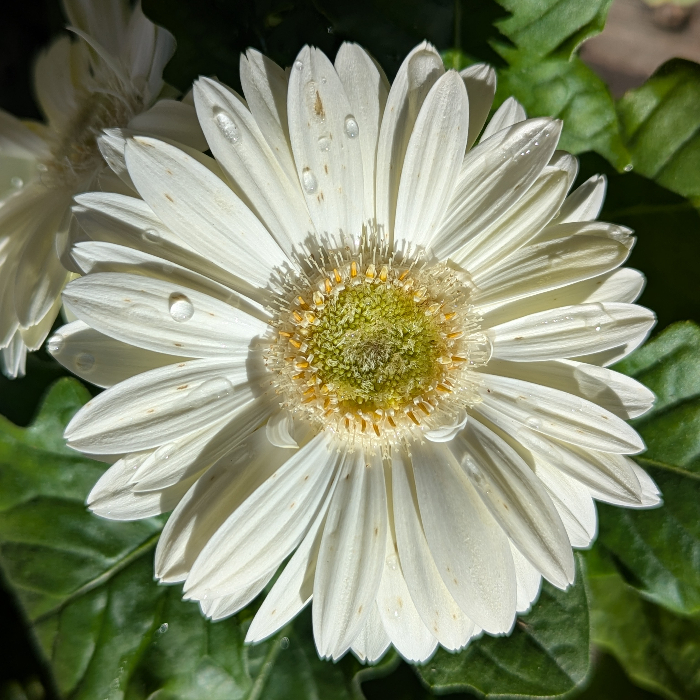
Though a popular cut flower, Transvaal daisy, Gerbera hybrida, is rare in-home gardens. When it does appear in home gardens, it is typically within pots or planters as an annual. As a perennial, it gets shabby during winter and is very popular among slugs and snails. It performs best with partial shade but can tolerate full sun exposure if it is not too warm.
Coarse basal foliage of Transvaal daisy can grow a foot high and a foot and a half wide. Its solitary floral stems stand a few inches higher. Bloom is two to four inches wide. Most garden varieties bloom with simple single blooms. Most florist varieties are semi-double. The floral color range includes cartoonish pastels of yellow, orange, red, pink and white.
Floral structure of Transvaal daisy is more variable than it seems to be. Several varieties produce blooms with brown or black centers. A few varieties with fuller double bloom are uncommon but increasingly popular. Fewer varieties that resemble spider mums are rare but could become more available. Transvaal daisy becomes available in nurseries now. They are seasonable in spring and autumn.
Tony Tomeo can be contacted at tonytomeo.com.