UNITED STATES—Cool season annuals are a clue. They are currently replacing deteriorating warm season annuals. Vegetable gardening should involve a similar process. After all, most vegetable plants are annuals. Some of those that performed through summer are now getting tired. Cool season vegetables, or winter vegetables, should replace warm season vegetables.
Just like different flowering annuals, different vegetables operate on different schedules. Some warm season vegetables finish late in summer. Others continue until autumn chill. Some cool season vegetables prefer to start early, while the weather is still warm. Others can start late to grow through winter. The transition may continue through part of autumn.
Furthermore, different phases of some vegetables begin and finish at different times. For example, most corn is finished for summer. However, some late phases can continue for early autumn. Early phases of beet can begin now. Later phases might continue through winter. Summer vegetables should relinquish space as cool season vegetables need it.
Cool season vegetables are mostly vegetative.
Most cool season vegetables are true vegetables. In other words, they are not fruit which contain seeds, like tomato, squash and corn. Cabbage and Chard are distended foliage. Broccoli and cauliflower are distended floral bloom. Carrot and beet are distended roots. All initially grow slower than warm season vegetables but then do not take time to ripen.
All cool season vegetables that are roots should grow from directly sown seed. They are susceptible to disfigurement with transplanting. Besides, they typically grow in quantities that are excessive for transplanting. They include beet, radish, turnip, carrot and parsnip. Cucumber and pea are conducive to transplanting but also grow very easily from seed.
Cabbage, broccoli, cauliflower and heading lettuces are larger cool season vegetables. Since only a few are desirable, planting them as cell pack seedlings is a practical option. They happen to be more conducive to transplanting than root vegetables are. Seedlings of cool season vegetables are now available from nurseries. Seed are always available. Although seedlings start growing sooner, more varieties are available from seed.
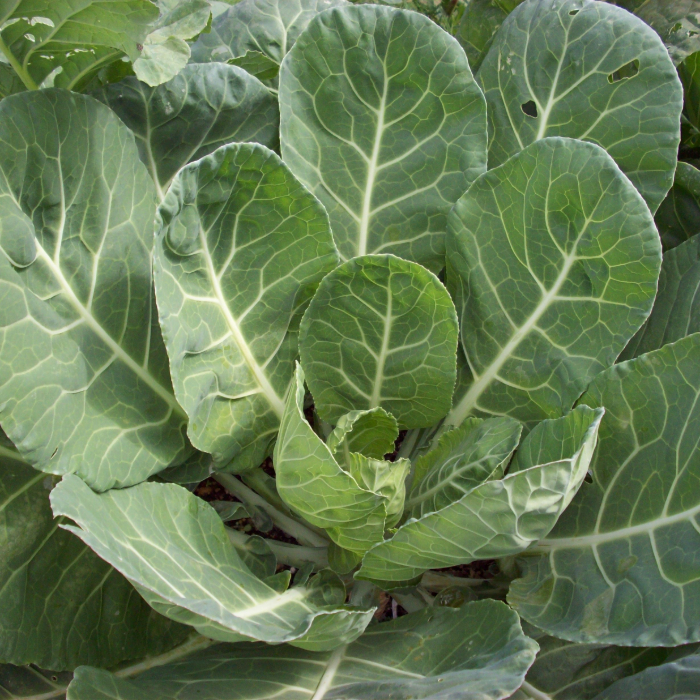
Highlight: Collard
Cabbage, broccoli, cauliflower, kohlrabi and Brussels sprout are all of the same species. Brassica oleracea is weirdly diverse and also includes kale and collard. All varieties are collectively the cole crops. They are cool season vegetables that grow from autumn until spring. Most are biennials that grow as annuals. Some kales and collards are perennial.
Collard does not form heads like cabbage does. It instead grows loosely on stout stalks. Most are only about two feet high. A few perennial types can grow six feet high and can grow from cuttings. All other types grow from seed or cell pack seedlings. More varieties are available as seed than as seedlings. Online markets offer more than nurseries stock.
Although perennial collards provide greens all year, they are better during cool weather. Also, collard greens are best while young and tender, before they mature too completely. They are easy to collect from the bottoms of the foliar rosettes, upward towards the tops. They need, however, to retain enough leaves to continue growing through their season.
Contact Tony Tomeo at tonytomeo.com.