UNITED STATES—Cool season vegetables are now becoming seasonable. Regardless of warm weather, it is technically autumn, so the weather will get cooler. It might be tempting to sow all seed and plant all seedlings for vegetables at once. There should be no rush, though. Spring is half a year from now. Until then, successive planting can prolong vegetable harvests.
Successive planting entails cultivation of small crops throughout their seasons. The first vegetable crops, or groups, should begin as soon as they are seasonal. The last should finish at about the end of their seasons. Various vegetables grow at various rates. Some begin or finish earlier or later than others. Timing should not be too complicated, though.
Each crop of vegetables should ideally finish production as its subsequent crop begins. The typical duration of production should determine the frequency of subsequent crops. For example, each beet crop is productive for about two weeks. Each subsequent crop should therefore begin two weeks after its preceding crop. Production can last all winter.
Successive planting is not just for winter vegetables.
Successive planting is not merely for cool season vegetables. It is as effective for warm season vegetables, and some spring and summer bulbs. The earliest cool season crops can replace the first warm season crops to finish. The process continues for weeks until the cool season vegetables replace all others. There is no rush for successive planting.
Large vegetables, such as broccoli, cauliflower and cabbage, require more space. They also require fewer crops because they mature relatively slowly. Successive planting for them may involve only one early crop and one late crop. Each crop might be productive for more than a month. Individual plants within each crop might mature at different rates.
Cucumber and pea are actually fruits rather than vegetables. Their vines are productive until they succumb to the weather. Those that start now may produce until the middle of winter. Those that start after the middle winter may produce until spring. Therefore, two crops may be the extent of their successive planting. One may suffice for mild climates. Cucumbers are actually warm season vegetables that grow for autumn and early spring.
Highlight: Beet
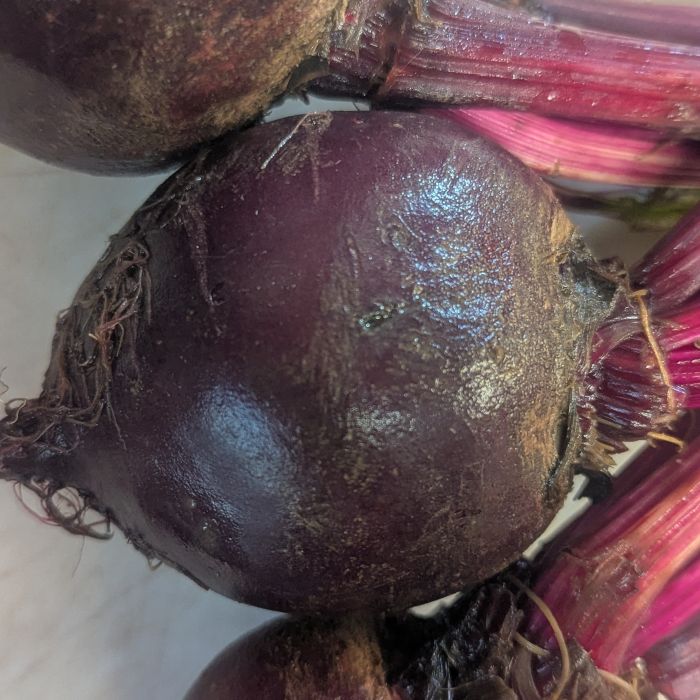
Like several of the cool season vegetables, beet, Beta vulgaris, is a root vegetable. It is, however, the same species as chard, which is leafy greens. Although beet varieties are different from chard varieties, beet foliage is also edible. Beet is biennial, so its roots are not palatable after their first year. They become tough and bitter as they bolt and bloom.
Most beet varieties produce big and round roots that are deep red. Others can be white, yellow or internally striped with red and white. Some have cylindrical roots, or roots that are shaped like carrots. Their foliage is mostly deep green, typically with red midribs like that of chard. Foliage stands only about half a foot broad and a foot high above ground.
As a root vegetable, beet should grow from directly sown seed. Transplanting damages or disfigures roots. Seed should go into organically rich and loose soil about now. Their successive planting may involve subsequent crops every two weeks until spring. Crops can be small if they are so frequent. Beet needs full sun exposure and regular watering.
Tony Tomeo can be contacted at tonytomeo.com.